 © Johannes Meran
Women.Power.Law gives isolated migrant women in Vienna their first structured encounter with democracy and the rule of law, turning 75 participants into confident civic voices and community multipliers.
THE WOMEN POLITICS NEVER REACHES
In Vienna, a lot of migrant women live in conditions that make political participation feel impossible. Patriarchal family structures, language barriers, traditional gender norms, and limited access to information keep them isolated from public life. Without citizenship, they cannot vote and are rarely heard. What makes Women.Power.Law distinctive from the start is who delivers it: Nachbarinnen staff come from the same communities, making genuine outreach possible where mainstream initiatives fail. This is not a programme designed for migrant women — it is one built and delivered with them in mind.
QUESTIONING AUTHORITY, FINDING A VOICE
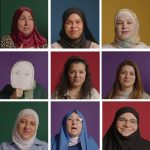
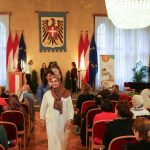
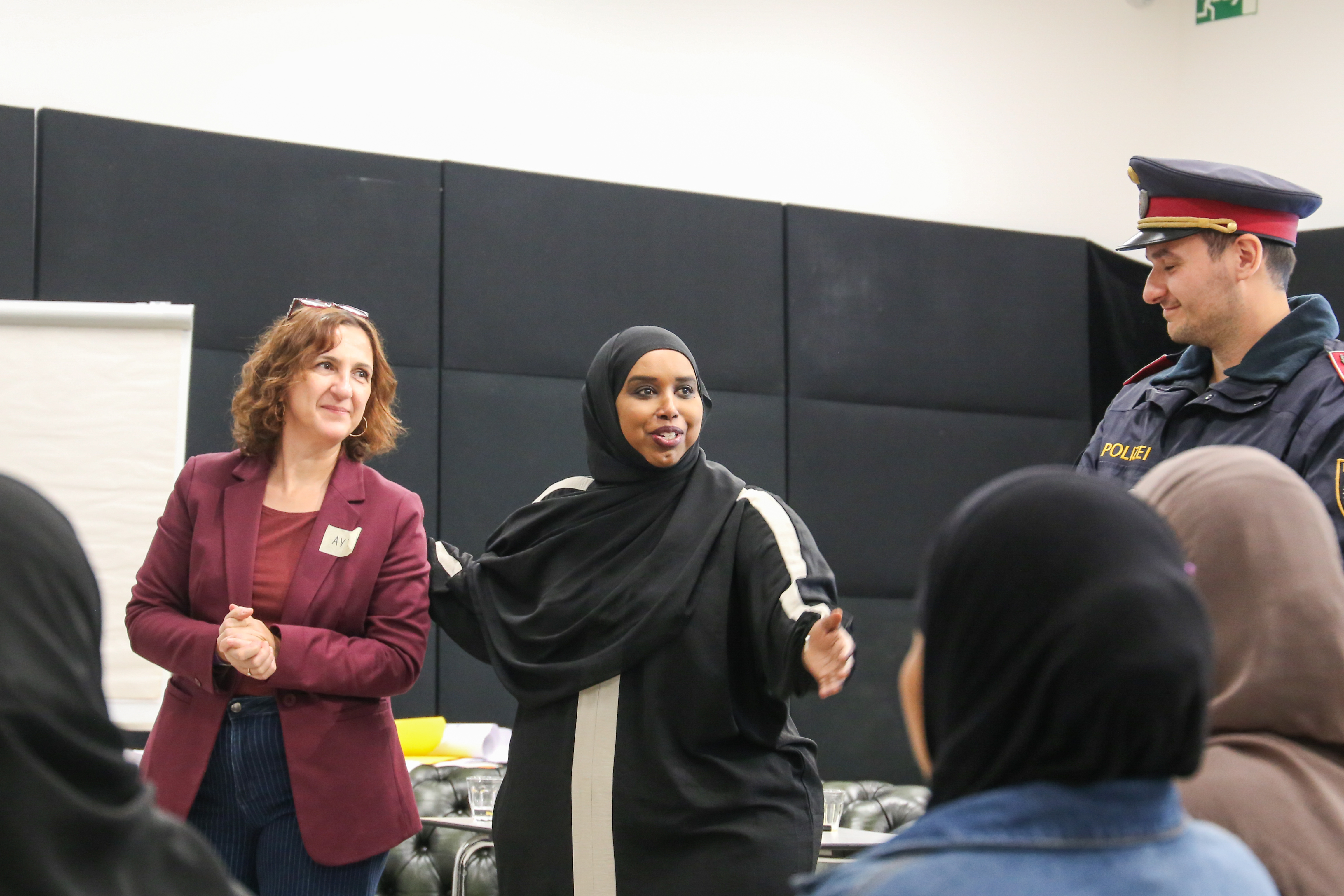
Across five workshops, 75 women from Arab, Afghan, Chechen, Iranian, Somali, and Turkish communities explored democracy, the rule of law, and social participation. A police officer attended not as a lecturer but was interviewed by the participants themselves, reframing authority as a service rather than a threat. Participants then created social media videos reflecting on their own experiences, later compiled into a short film. The programme concluded with a gala where the most engaged women received special recognition from Federal Minister for Women Eva-Maria Holzleitner, sending a powerful signal that their voices matter at the highest level.
CONFIDENCE THAT SPREADS
The impact of Women.Power.Law extends well beyond the workshops. Participants left as multipliers, bringing conversations about democracy, rights, and civic life into their families and wider communities. Their public presence through social media and film challenges stereotypes and offers Austrian society new, confident images of migrant women. Many report greater confidence, increased civic engagement, and a growing motivation to keep influencing those around them. Recognition from the Federal Minister for Women amplified this further, validating perspectives rarely heard at that level and demonstrating that genuine inclusion, even on a small scale, can create change that travels far.