 © Municipality of the 8th District of Budapest
In the heart of Budapest, Józsefváros is proving that local government can be a force for inclusion and participation, even as national politics pushes in the opposite direction.
A DISTRICT THAT CHOSE A DIFFERENT PATH
Józsefváros, Budapest's 8th district, is one of the city's most diverse areas, where poverty and social exclusion affect many residents. As Hungary's national government has eroded civil rights and municipal autonomy over the past 15 years, this district chose a different direction. Since 2019, the local government has transformed from a passive observer into an active driver of inclusion and civic participation, anchored by two pioneering municipal offices: the Office of Community Participation (2020) and the Office of Equal Opportunities (2025).
INSTITUTIONALISING PARTICIPATION AND INCLUSION
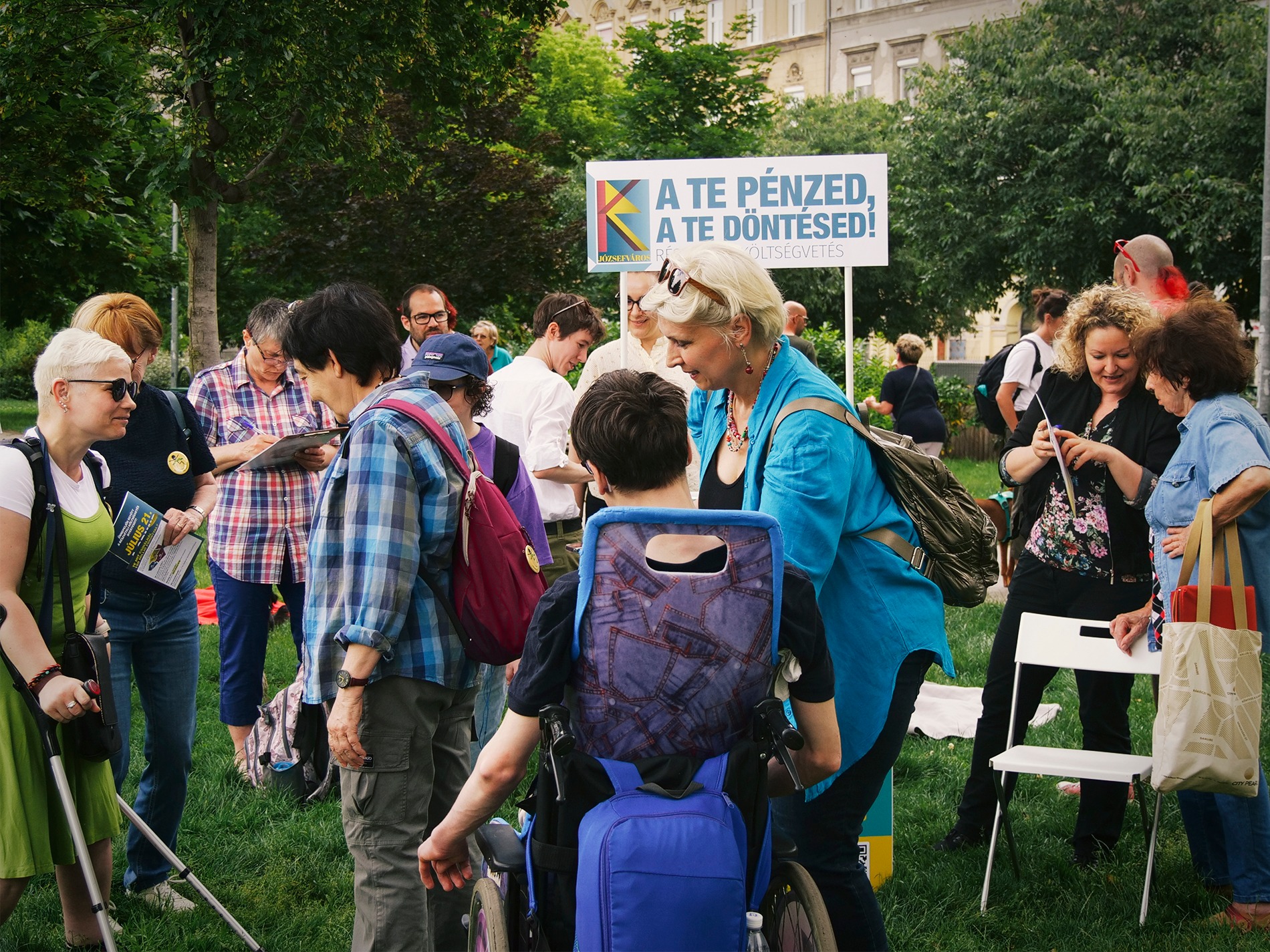
Both offices were the first of their kind in Hungary. The Office of Community Participation transformed local governance by embedding residents directly into decision-making through participatory budgeting, community consultations, and forums. No urban development proceeds without community input. The Office of Equal Opportunities promotes inclusion for marginalised groups including Roma Hungarians, women, people with disabilities, LGBTQ people, and migrants through dedicated strategies, municipal programmes, and civil society partnerships. Together, they represent a genuine institutional innovation in a country where such models are rare.
REAL CHANGE, REPLICABLE MODEL
Each year, thousands of residents and hundreds of organisations engage in participatory programmes across the district. Concrete outcomes include a support centre for domestic violence victims, accessible services for people with disabilities, an English-language guide to the district, and internship opportunities for Roma youth. The model has since been replicated by other Hungarian municipalities, proving that strong local institutions can protect rights, strengthen social cohesion, and offer a credible alternative to exclusionary national policies.