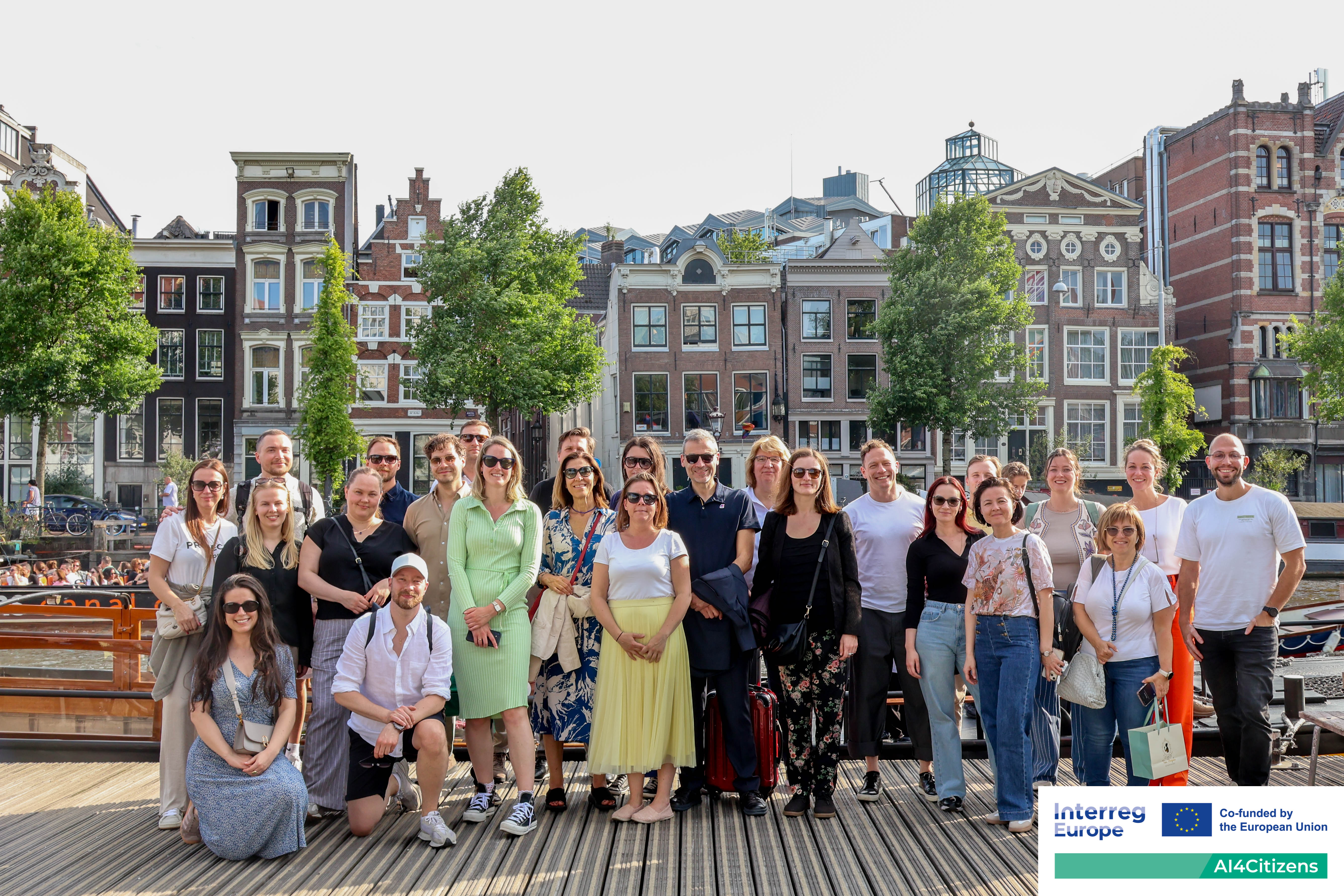
Seven European cities are working together through AI4Citizens to ensure AI in public services is transparent, accountable, and shaped by the people it affects.
GOVERNING AI IN THE PUBLIC INTEREST
Cities across Europe are increasingly using artificial intelligence in public services, but without shared practices and frameworks, the risks are real: bias, lack of accountability, and growing mistrust. AI4Citizens, funded by Interreg Europe and running from 2024 to 2028, brings together seven European cities and regions to address this collaboratively. The project focuses on practical change: developing local AI governance models, strengthening AI literacy within administrations, and applying the EU AI Act in real city contexts, helping municipalities move from reactive adoption to genuinely responsible governance.
FROM TECHNICAL CHALLENGE TO DEMOCRATIC CONVERSATION
What sets AI4Citizens apart is its framing of AI governance as a democratic challenge, not just a technical one. The project shifts the focus from deploying tools to shaping how decisions about AI are made and who is involved. In Tampere, for example, citizens explore how AI may shape everyday life through workshops and future-oriented discussions, helping surface concerns and build trust. Across all partner regions, the project actively engages residents, especially youth, older people, and immigrant communities, ensuring that AI in public services reflects shared values rather than just technological development.
BUILDING A SHARED EUROPEAN APPROACH
AI4Citizens creates lasting impact by embedding improved AI governance into the policies and practices of each partner city, from developing governance frameworks to aligning processes with the EU AI Act. Beyond individual cities, the project contributes to a shared European approach to responsible AI in public services, strengthening transparency, accountability, and public trust across the partnership. By equipping both administrations and residents with the knowledge to engage meaningfully with AI, it supports a shift toward more inclusive and future-oriented public services across Europe.