
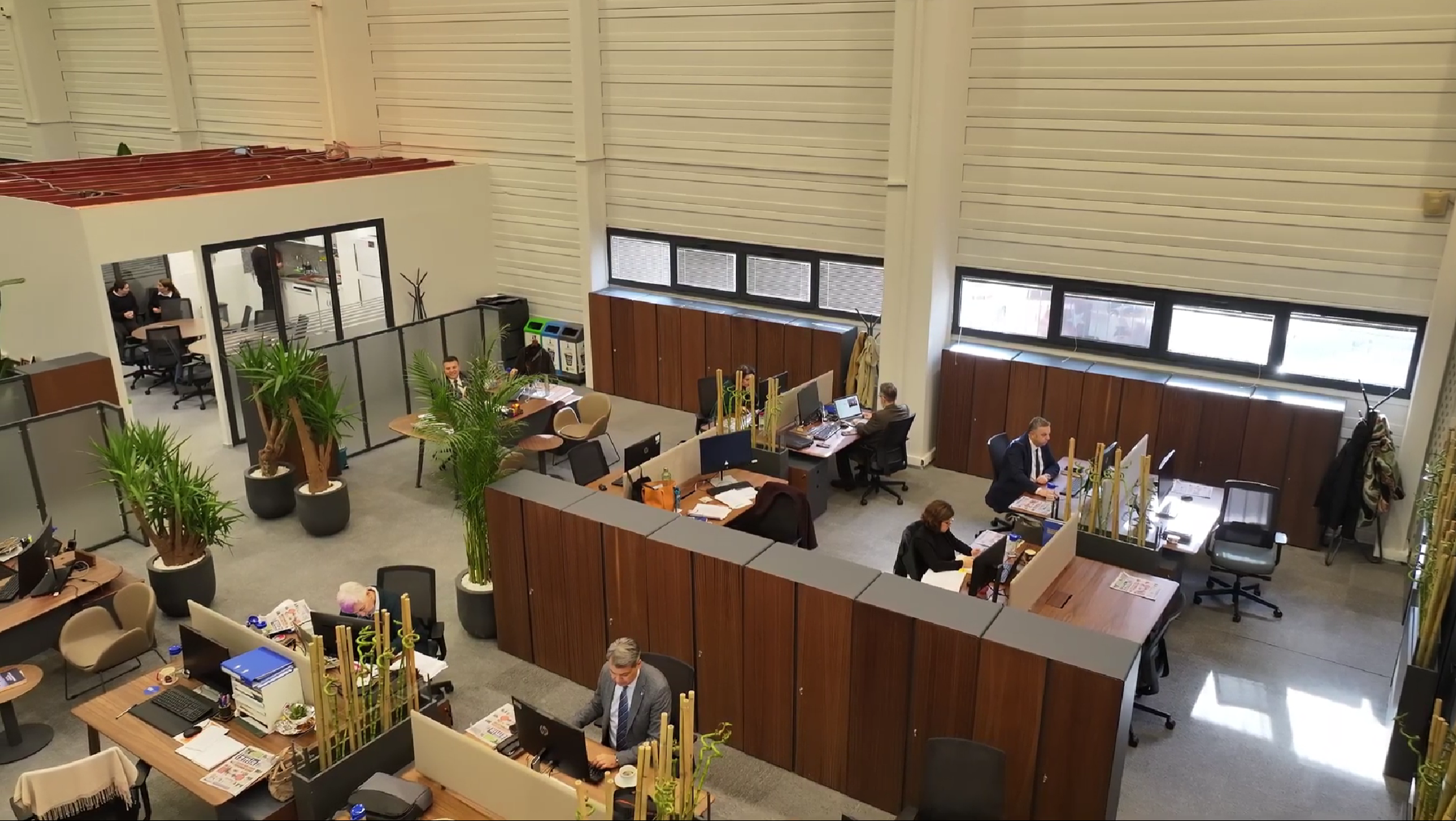
İzmir is redesigning how decisions are made within its municipality - replacing top-down hierarchies with collaborative, mission-based teams to make local government faster, more transparent and more accountable.
WHEN POWER CONCENTRATES, INSTITUTIONS SUFFER
When authority is held by too few people, institutions become slow, opaque, and vulnerable to authoritarian tendencies. This is a structural problem in many municipal administrations, and one that İzmir has chosen to directly confront. Introduced in November 2025, the Collaborative Open Office is not a physical workspace but a fundamental shift in how authority is distributed within the municipality. Rather than decisions flowing top-down through rigid hierarchies, it creates collective processes where leadership, management, and interdisciplinary teams work together within a shared daily framework.
REDISTRIBUTING AUTHORITY, REDEFINING LEADERSHIP
The model translates strategic priorities into mission-based teams drawn from diverse expertise across the municipality. These teams operate with reduced hierarchical barriers and closer proximity to decision-making, enabling faster coordination, greater transparency, and more responsive governance. The innovation is not a new tool or structure but a shift in mindset: leadership becomes collaborative and mission-oriented, reducing institutional dependence on centralised decision-making and transforming how public institutions respond to complex challenges.
FASTER, FAIRER, MORE ACCOUNTABLE
A post-implementation survey with 70 senior executives points to faster decisions, stronger coordination, quicker approvals, and reduced bureaucratic delays. Participants also report more transparent collective decision-making and a stronger sense of shared responsibility. Mission teams have accelerated the delivery of strategic priorities through real-life pilot applications. İzmir's experience offers a practical and replicable model for municipalities across Europe seeking more open, accountable governance structures that are resistant to the creeping centralisation of power.