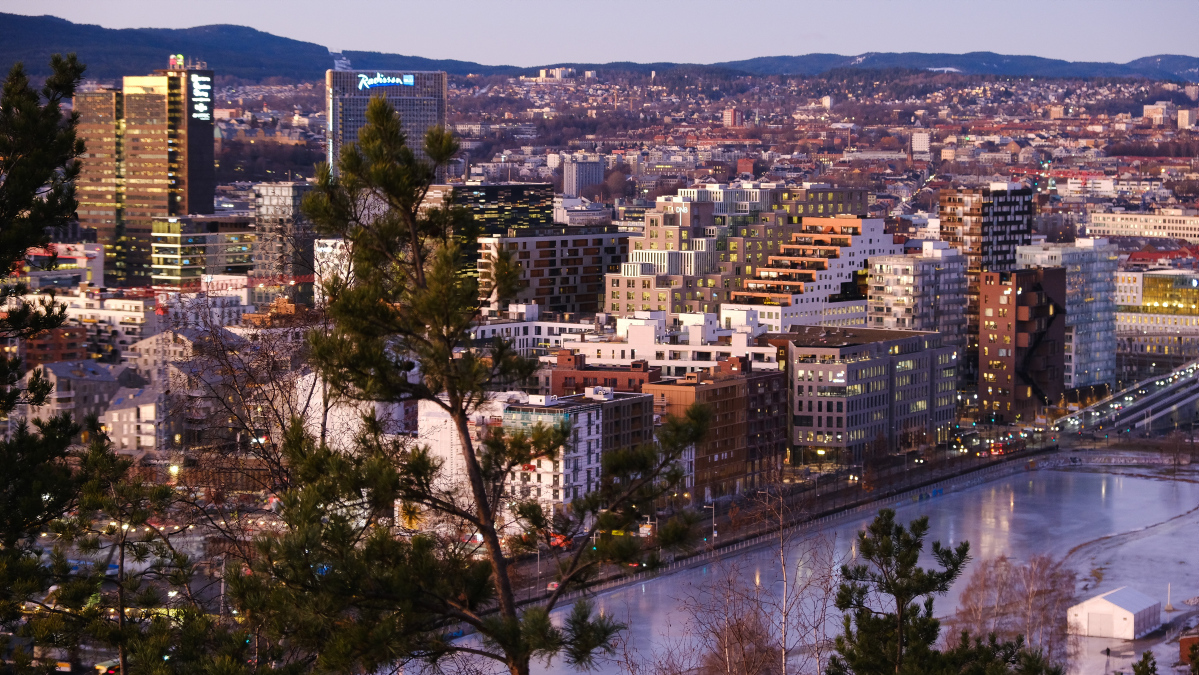
 © Rikke Dahl Monsen
As the world's first climate budget, Oslo's model has cut direct emissions by 40%, electrified public transport, and become a blueprint for cities across Norway and internationally.
TURNING CLIMATE TARGETS INTO GOVERNANCE
As one of Europe's fastest-growing cities, Oslo faces the challenge of reducing emissions while accommodating population growth. To meet its ambitious climate goals, the city introduced the world's first Climate Budget in 2016. Integrated into the annual municipal budget, the tool assigns clear responsibilities for delivering climate measures across sectors, including transport, construction, waste management, and energy use. From 2025, the Climate Budget addresses all five of Oslo's climate targets, creating a comprehensive framework for long-term action.
EMBEDDING CLIMATE ACTION INTO THE BUDGET CYCLE
Rather than treating climate agency as a separate strategy, Oslo incorporated emissions reduction into the city's core decision-making processes. By linking climate targets to the ordinary budget cycle, the model ensures that responsibility is shared across all departments and supported by transparent public accountability. This institutional approach encourages cross-sectoral cooperation and helps maintain continuity, making climate action an integral part of municipal governance rather than dependent on changing political priorities.
DELIVERING RESULTS WITH GLOBAL REACH
The Climate Budget has helped Oslo reduce direct emissions by up to 40% since 2009, electrify its entire public transport fleet, and expand cycling infrastructure by 115 kilometres. Cycling has increased by 62%, while construction sites are transitioning to zero-emission machinery. Beyond Oslo, the model has inspired hundreds of municipalities across Norway and is being tested internationally through the C40 Cities programme. By transforming climate commitments into a permanent governance mechanism, Oslo offers a replicable model for cities worldwide.